
Your seat belt is the single most effective
device for preventing death on Utah roads
A seat belt only works if it’s worn correctly.
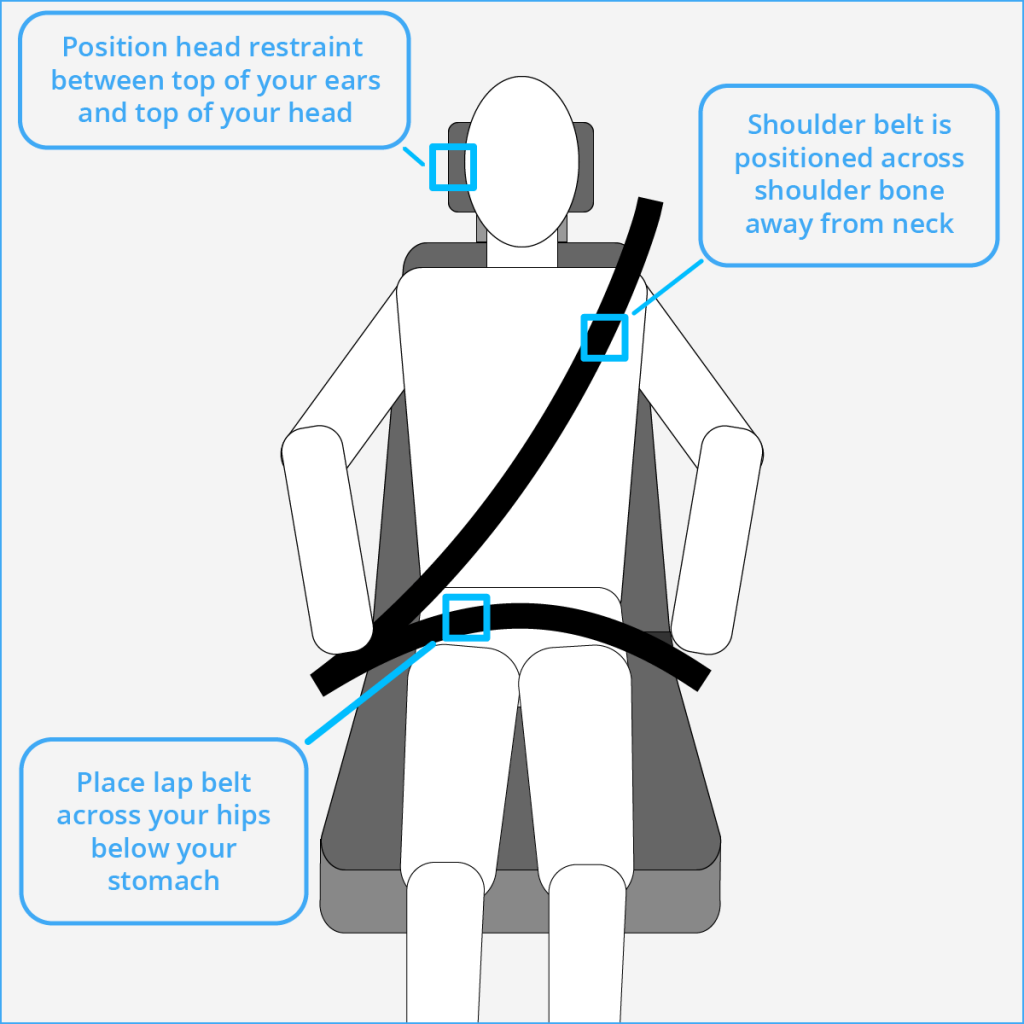
- Shoulder Belt: Must cross your chest, away from your neck. NEVER put it behind your back or under your arm.
- Lap Belt: Should fit low across your hips and pelvic bone, not over your stomach.
- Pregnancy: If pregnant, secure the lap belt below your belly, across your hips and pelvis.
- Special Needs: If you are short, overweight, or need a roomier belt, check with your vehicle manufacturer or dealer about seat belt adjusters or extenders to ensure the best fit.
For specific safety tips for Teens including Graduated Driver Licensing laws and other safety tips, visit https://zerofatalities.com/ready-for-driver-license/
Head Restraints
Like the seat belt, head restraints are a critical part of your vehicle’s safety equipment. Correct positioning of your head restraint can protect you and your passengers from whiplash injuries, a broken neck and death.
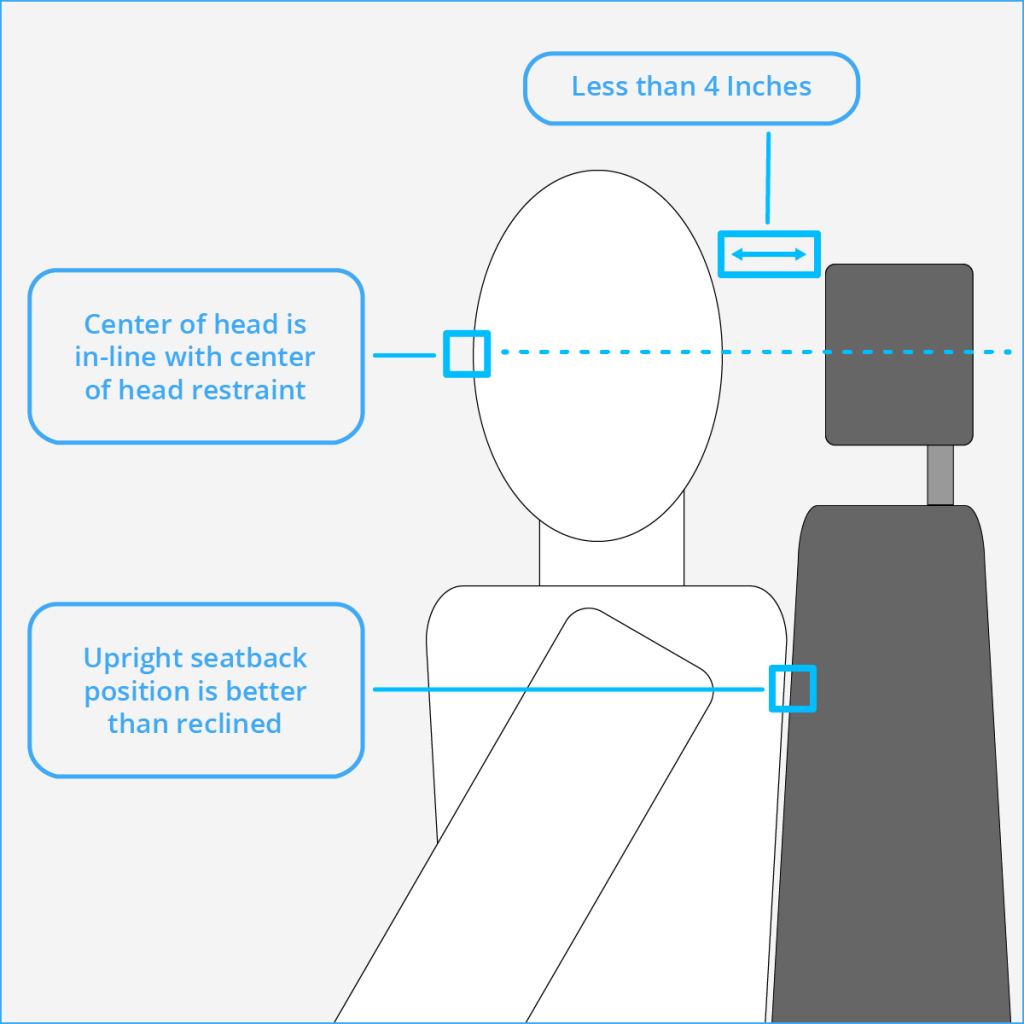
- To minimize neck injury, NHTSA suggests placing the head restraint at a height where the center of your head is in-line with the center of the head restraint.
- The distance from the back of the head to the restraint should be as small as possible, preferably less than four inches, according to the Insurance Institute of Highway Safety.
If the head restraint can be horizontally adjusted, it should be placed so that it’s as close to your head as possible, without pushing your head forward or causing the height of the restraint to drop. - The position of your seatback is also important—less is better when it comes to reclining. A more upright seatback means that the head restraint will likely be in a safer position—one that’s closer to your head.
Tips for Success
Set the Example
Always wear your seat belt. When the driver is buckled, children are far more likely to be belted as well.
Keep Your Distance
Keep at least 10 inches between the center of your chest and the steering wheel or dashboard.
Back Seat is Safest
Children under age 13 should ride properly restrained in the back seat.
Frequently Asked Questions
Do airbags replace seat belts?
No. Airbags are designed to work with seat belts, not to replace them.
How dangerous are unbuckled passengers?
They can become projectiles in a crash, increasing the risk of hurting or killing others in the car by 40 percent.
Is it always fatal to be thrown from a car?
If you are completely ejected during a crash, it is almost always fatal. Buckling up keeps you safe and secure inside your vehicle.