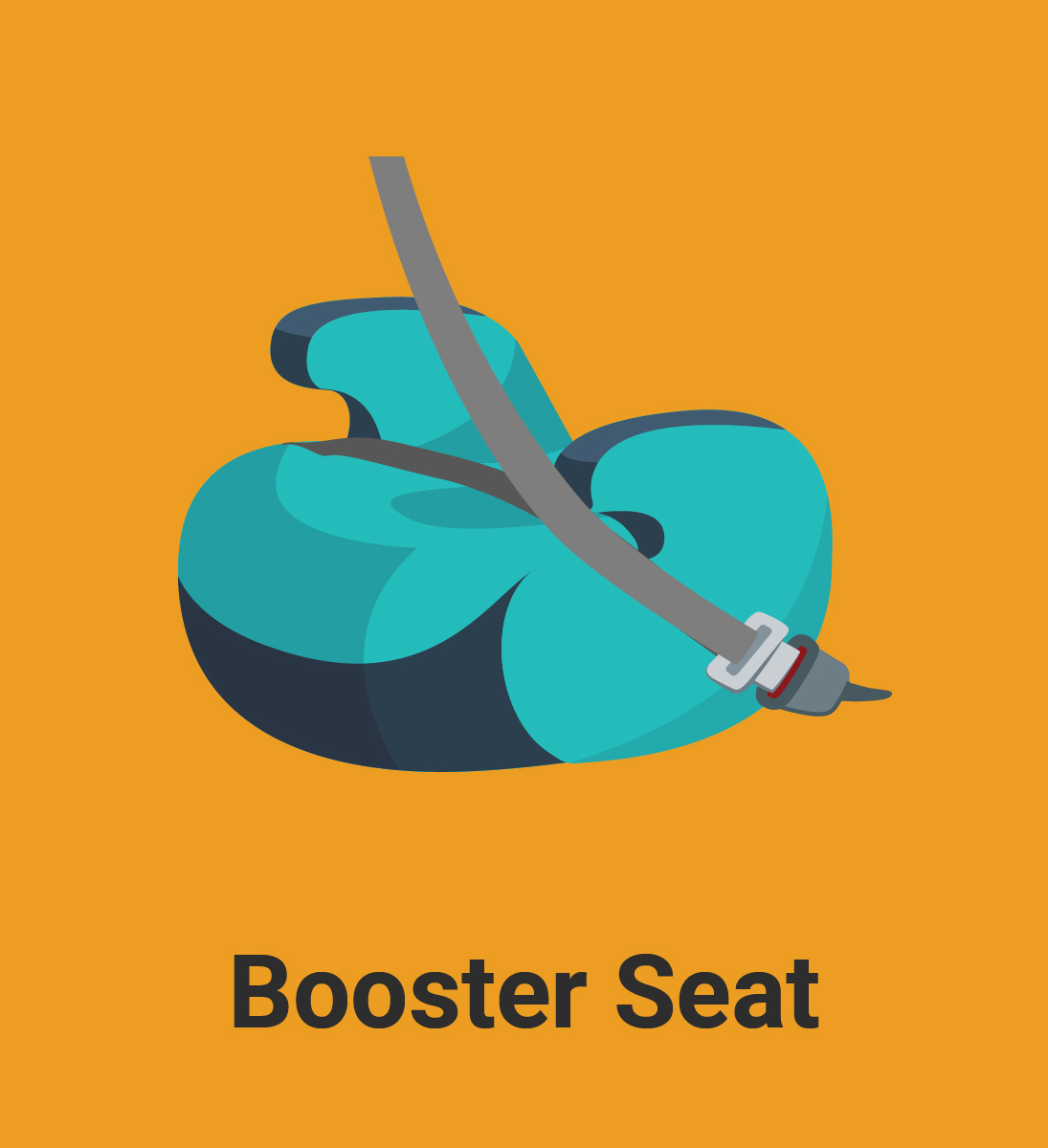
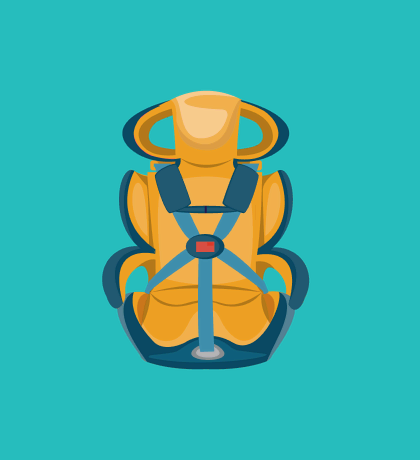
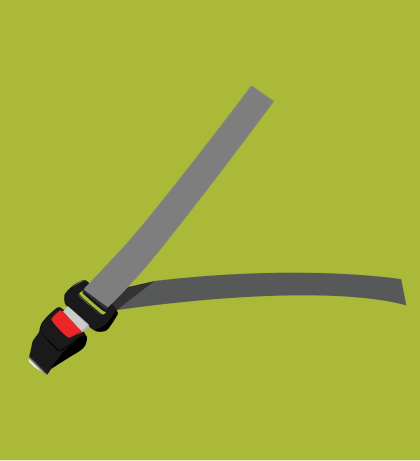
Teal and dark blue booster seat with gray seatbelt strap labeled "BOOSTER SEAT"

Transitioning From Forward-Facing to Booster Seat

Selecting a Booster Seat Seat

  • Does the child fit the booster seat? (Check manufacturer height and weight requirements) 
  • Options include: 
    • Combination seat (turns into a booster)
    • High back
    • No-back booster

Installation Checklist

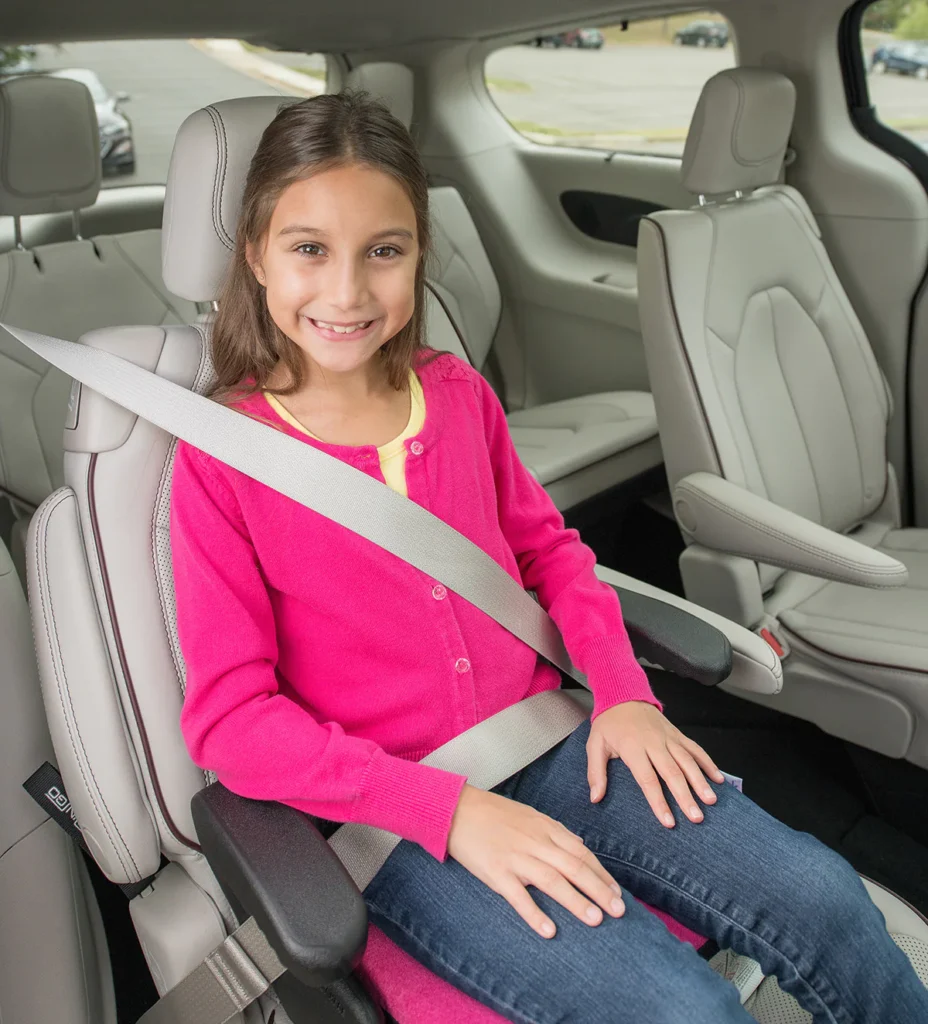
Securing Your Child

  • Place the lap belt low across the hips, not the stomach.
  • The shoulder belt should cross the middle of the chest and shoulder.
  • Never place the shoulder belt behind the back or under the arm.
  • Your child’s ears should not be above the seat back or headrest.
  • Booster seats only work correctly when the seat belt fits the right way.

Tips for Success

Check Your Child's Height and Weight

Check your child’s height and weight a few times each year.

Children Under 13

Children under 13 should ride in the back seat whenever possible.

If a Child Must Ride in Front

If a child must ride in front, move the seat back as far as possible and turn off the airbag if you can.

Lead by Example

Kids are more likely to buckle up when adults do—lead by example.

Car Seat Recommendations

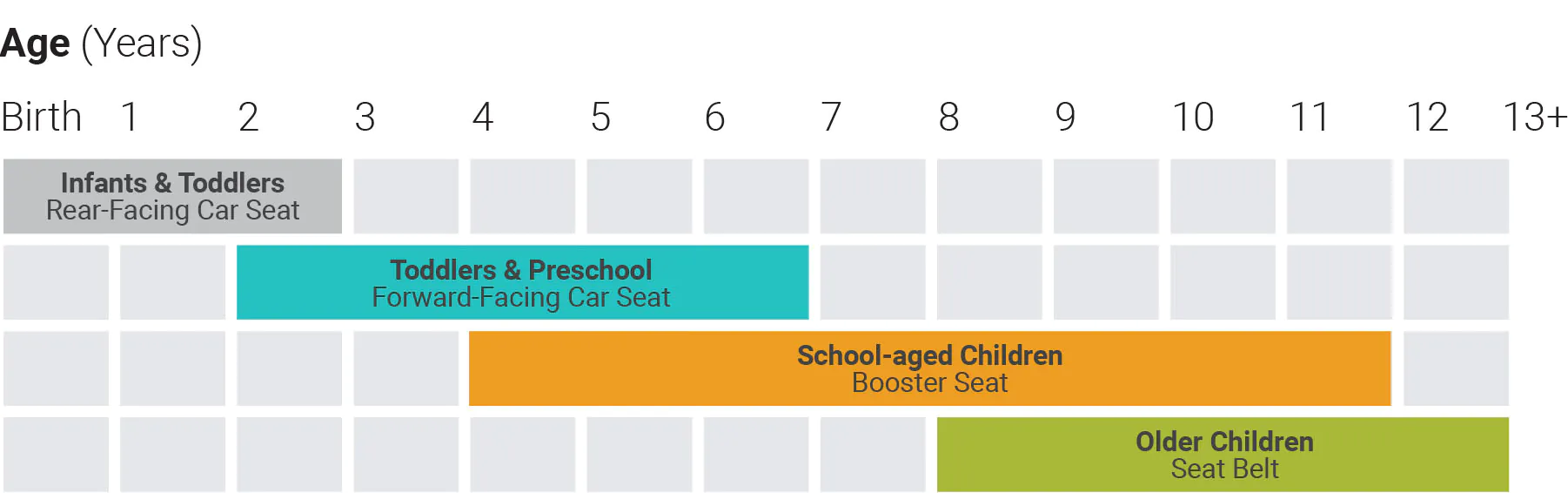
Age-based car seat recommendations: Birth-1 year (rear-facing car seat), 2-5 years (forward-facing car seat), 4-10 years (booster seat), 12+ years (seat belt)